ServicesReverse Osmosis
Reverse Osmosis in Missouri City
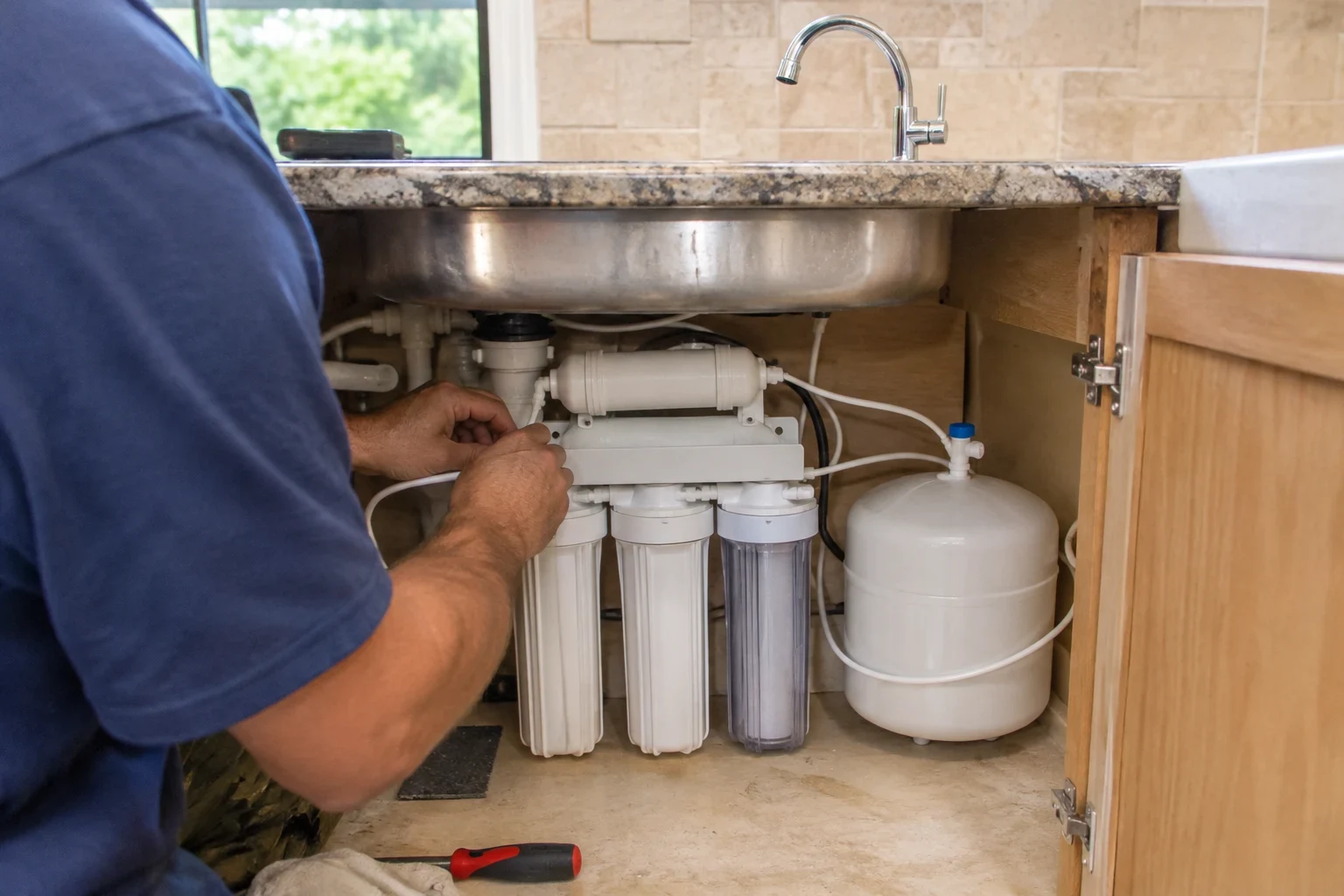
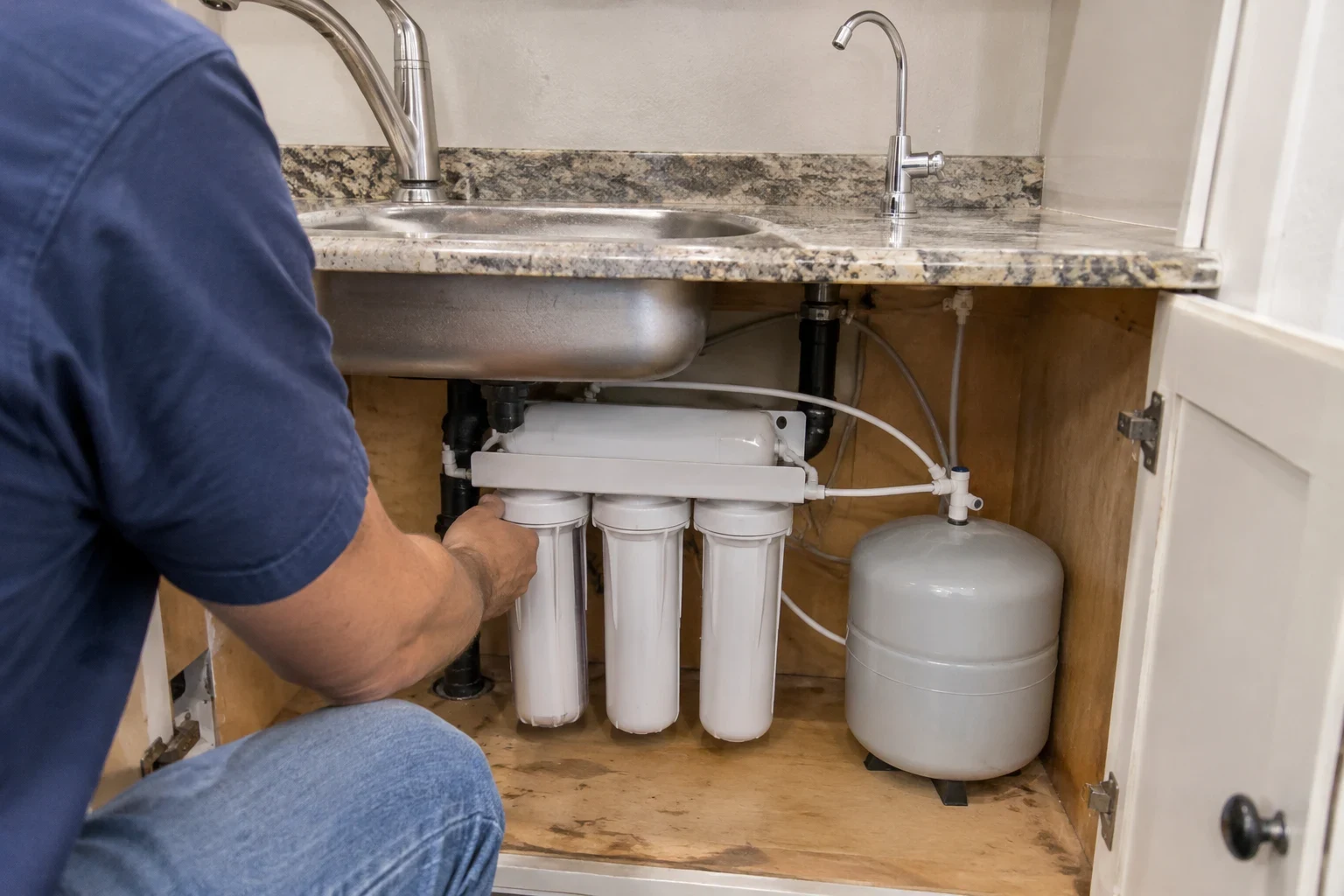
We put a reverse osmosis system under your kitchen sink, with its own faucet for drinking and cooking water. Once it has run a few weeks, we stop by again to look it over and go through filter care with you.
What a reverse osmosis system does
Reverse osmosis pushes your water through a very fine membrane. Most dissolved stuff stays behind and goes down the drain. What comes out is water for drinking, cooking, coffee and ice.
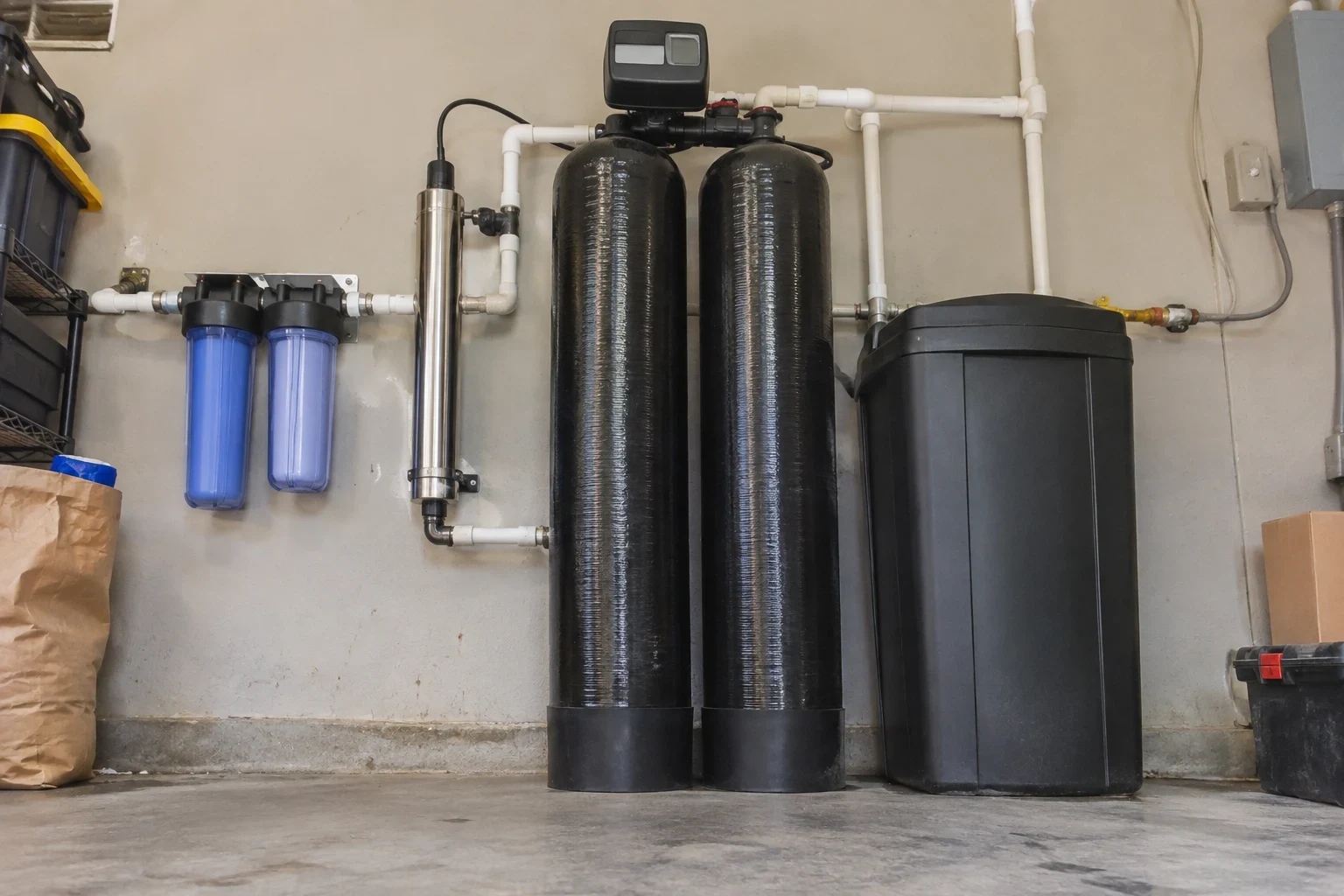
RO works at a single spot, most often the kitchen sink. Showers, laundry and the rest of the house keep getting regular water. If your issue is chlorine smell in the shower or scale on fixtures, whole-home filtration or a water softener may be the better fit. If you mostly want better water in a glass, RO is usually the right call.
The install is the short part. The months that follow matter more. Filters load up, the membrane wears and tank pressure drifts. So we come back to check the system and leave you a clear plan for what to change and when.
What comes with the install
- Sediment and carbon prefilters
- The first two stages trap sand, rust flakes and chlorine ahead of the membrane. Chlorine slowly eats away at a membrane, so these low-cost filters guard the part that costs the most to replace.
- The RO membrane
- This is where most dissolved solids get pulled out. We size it to how much drinking and cooking water your family actually goes through.
- Storage tank or tankless unit
- A tank holds a few gallons so you get a decent flow at the faucet. Tankless units take less cabinet space but need power under the sink. We'll tell you which one fits your cabinet.
- Dedicated faucet and drain line
- You get a separate faucet on the sink or counter. We tie the reject water into your drain with a proper saddle so it doesn't back up.
- Optional fridge or ice maker line
- If your refrigerator is close enough, we can run filtered water to it. That way your ice tastes like your drinking water.
- A return visit
- Once the system has a few weeks of use, we're back at your sink. We look over every fitting, test what the faucet puts out and set your filter schedule with you.
When RO is worth a look
Your trunk is full of water jugs
An RO faucet usually ends the weekly bottled water run. It also means less plastic going out with the recycling.
Tap water tastes like a pool
City water is treated with a disinfectant. It's safe, but some people can't stand the taste. RO with a carbon stage takes most of it out.
Cloudy ice and spotted glasses
White film on glasses and cloudy ice point to dissolved minerals. RO removes most of them from your drinking water.
Older plumbing in your home
Old pipes and solder can add metals to water sitting in the lines. A water test tells you what's there, and RO is a good way to handle it at the tap.
Coffee and tea taste flat
What's dissolved in the water changes how coffee and tea taste. A lot of customers notice this first.
How the job goes
- 1
Phone call and a look at the sink
We start with a call about what bothers you about your water. Then we look under the sink at the space, the disposal, the drain and the counter material. If you're not sure what's in your water, we suggest water testing first.
- 2
Install day
We shut off the cold line, mount the filter housings and set the tank. Then we drill the faucet hole and connect the drain. Most installs take a few hours, and we lay down a mat and clean out the cabinet when we're done.
- 3
Flush and walkthrough
A new system needs to fill and flush before the water is ready. We run it, check every fitting for drips and show you the shutoff valve and filter housings.
- 4
We check back
Once the system has been running a while, we follow up. We look for slow leaks, check tank pressure and output, and tell you which filter is due next.
What moves the price
We give you the price by phone or at the visit, and we go through each part so you know what you're paying for. We offer free installation, and we offer full services after the sale. What changes the total is mostly the system you pick and how your kitchen is laid out.
- Tank or tankless
- Tank systems are simpler. Tankless units with a pump cost more but save cabinet space and give a faster flow.
- Your countertop
- Drilling through laminate is quick. Granite and quartz take a diamond bit and more time.
- Extra stages
- Some people add a remineralization stage to put back calcium and magnesium for taste. That's close to what our alkaline water systems do.
- Fridge and ice maker runs
- A longer line to the refrigerator means more tubing and more time. It depends on how far the fridge sits from the sink.
- Space under the sink
- A crowded cabinet with a disposal and a hot water dispenser can take more planning to fit everything.
Reverse osmosis questions
Something not covered here? (281) 519-2358
How often do the filters need changing?
Prefilters usually get changed about once a year, sometimes sooner if your water carries more sediment. The membrane lasts longer, often a few years. We go over your exact schedule at the follow-up and leave it written down under the sink.
Does an RO system waste water?
Yes, some. The membrane needs a steady flush to stay clean, and that flush water leaves through the drain line. Newer units send less of it away than older designs did. We'll walk you through the tradeoff when you choose a model.
Will it take out the good minerals too?
It pulls out most minerals along with everything else. Food is where most of your calcium and magnesium comes from anyway. If you prefer the taste with some minerals put back, we can add a remineralization stage.
I have a garbage disposal. Will it still fit?
Usually, yes. We look at the cabinet before install day and pick a tank size or tankless unit that fits around the disposal and pipes.
Do I need whole-home filtration too?
Not always. RO handles drinking and cooking water at one tap. If chlorine smell in the shower or scale on fixtures also bothers you, whole-home filtration covers the rest of the house.
What happens at the follow-up visit?
We check every fitting for slow drips, test what's coming out of the faucet and check tank pressure. Then we answer whatever came up in the first few weeks of use. Most people have one or two questions.
Let's plan your RO install
Give us a sense of your cabinet space and what bugs you about your tap water. We'll pick a system that fits, set an install day and stop by again once it's running.