ServicesWell Water Treatment
Well Water Treatment in Missouri City
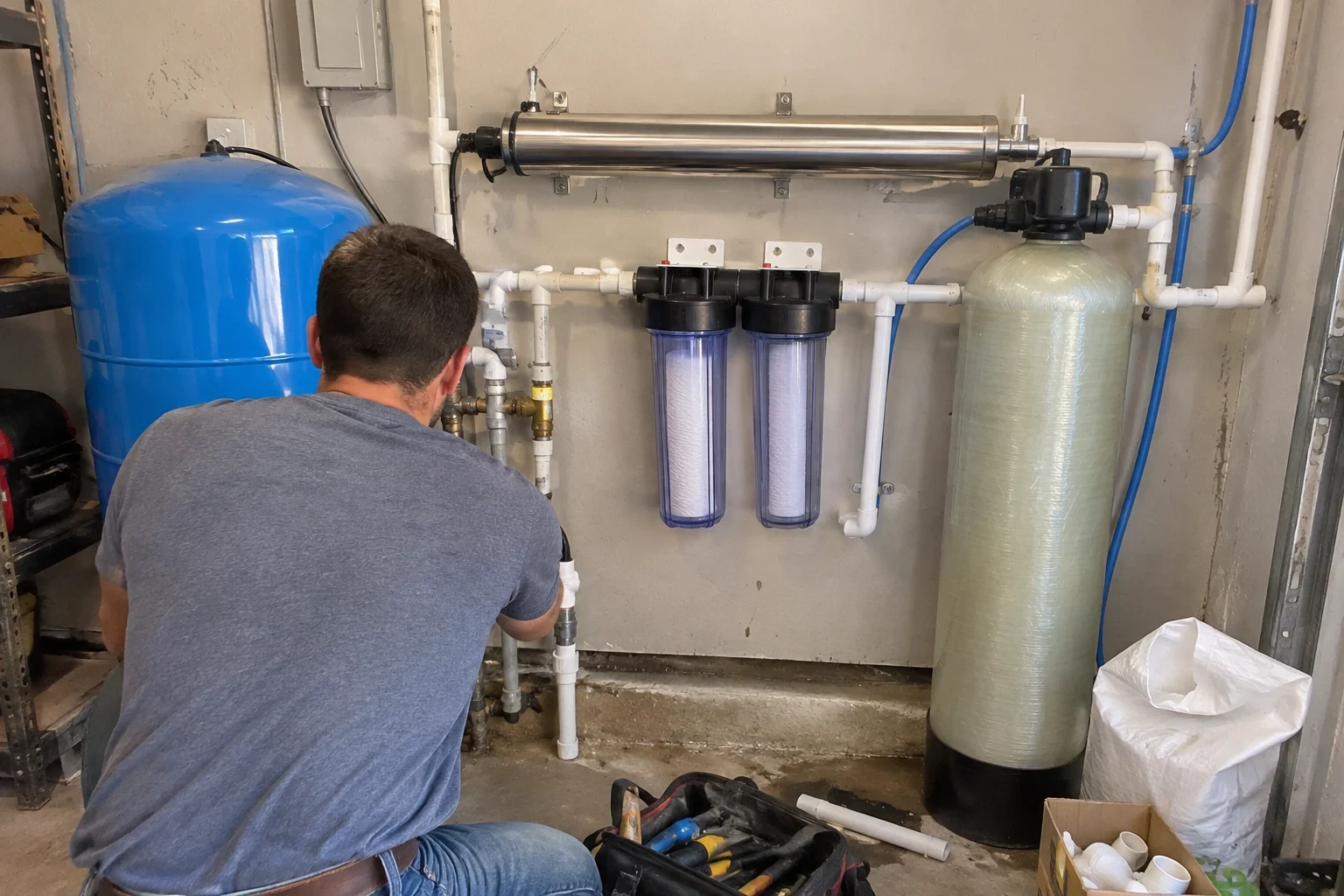
If your home runs on a private well, the water can carry iron, sulfur smell, sediment or hardness that city water never sees. We test it, fit a system to what the test shows, install it, then come back to check it and show you how to keep it running.
What well water treatment is, and when it makes sense
A well is your own water supply. Nobody treats it before it reaches your tap, so whatever is in the ground ends up in your pipes, your water heater and your glass. That can be harmless minerals, or it can be iron that stains every fixture, hydrogen sulfide that smells like rotten eggs, or sand that wears out valves.
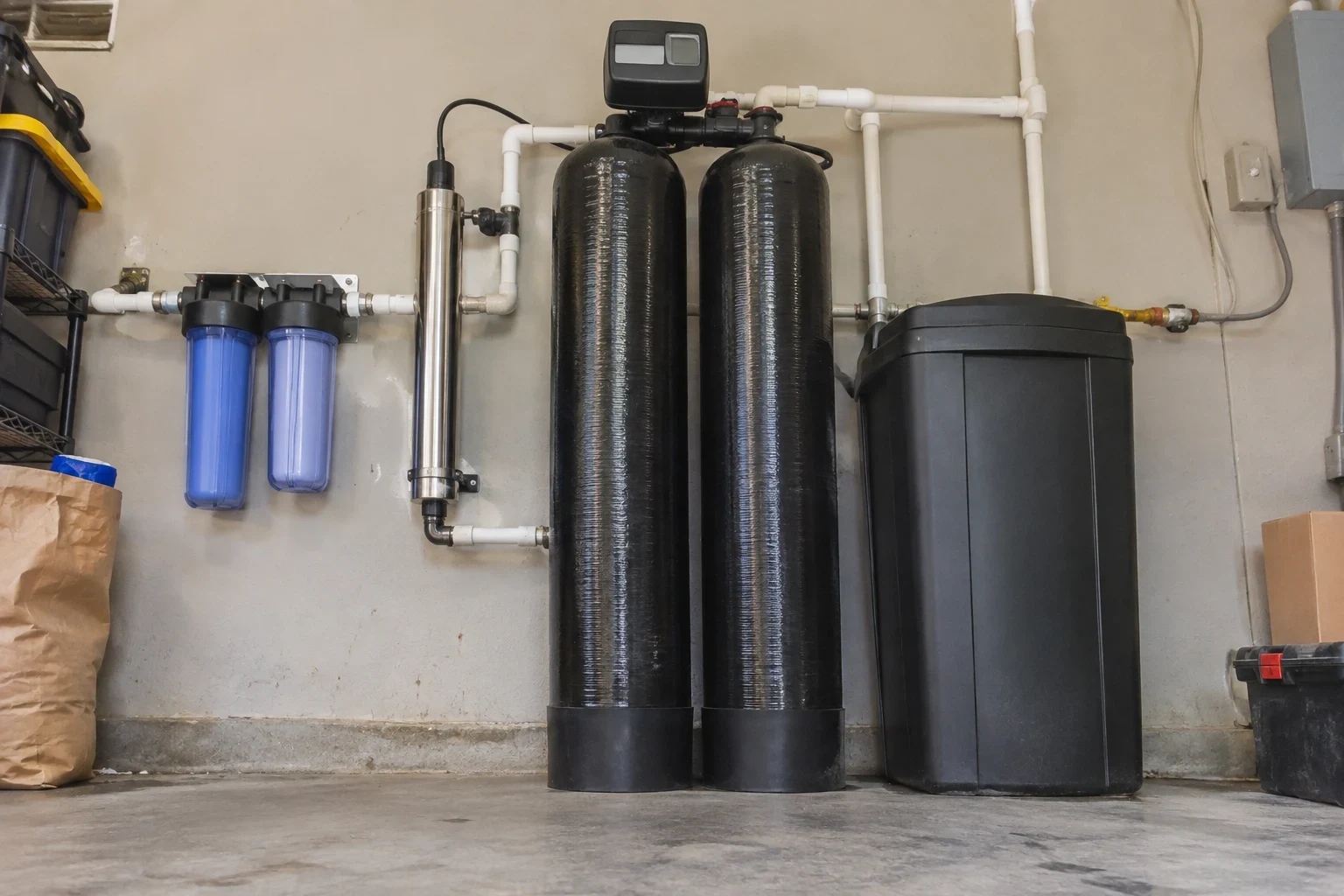
Treatment is a set of parts plumbed in where the water enters your home. Each part handles one problem. We don't sell a box and hope it fits. We test the water, then pick only the stages your well actually needs.
The job isn't done when the last fitting is tight. We come back after the install, check the water again and walk you through the care each stage needs.
What the work includes
A water test before anything else
We start with a test of your well water for iron, manganese, hardness, pH, sulfur and sediment. If bacteria is a concern, we test for that too. The results decide the system, not a sales sheet. More on this is on our Water Testing page.
Sediment filtration
A prefilter catches sand and grit before it reaches the rest of the system. It protects the other stages and your fixtures.
Iron and manganese removal
Iron is the usual cause of orange and brown stains in tubs and toilets. An iron filter pulls it out so the stains stop and laundry stops coming out dingy.
Sulfur odor treatment
That rotten egg smell comes from hydrogen sulfide. We size equipment to remove it so your showers and kitchen smell like nothing at all.
Hardness and bacteria, when the test shows them
If your well is hard, we can add a softener stage. If a test shows bacteria, a UV unit treats the water without chemicals. We only add these when the numbers call for them.
Signs your well water needs treatment
Orange or brown stains
Rust-colored rings in sinks, tubs and toilet bowls almost always point to iron. Bleach won't help and can make it worse.
A rotten egg smell
If the smell is strongest on hot water or first thing in the morning, sulfur is likely. It's unpleasant but treatable.
Grit in aerators and showerheads
Sand and sediment clog faucet screens and wear out washing machine valves. A prefilter usually fixes it.
White crust and spotty dishes
Scale on faucets and spots on glasses mean hard water. It also builds up inside your water heater, where you can't see it.
You just bought a home with a well
You don't know what the last owner did or didn't do. A test and a look at any existing equipment tell you where you stand.
An old system that stopped working
If stains or smell came back, the media may be spent or a valve may have failed. We'll tell you if it can be repaired or needs replacing.
How the job goes
- 1
Test and talk
We test your well water and go over the results with you in plain terms. You'll know what's in it and which of those things need fixing.
- 2
A clear plan and quote
We lay out the stages we recommend, what each one does and what it costs. If something isn't needed, we say so.
- 3
Install day
We plumb the system in near your pressure tank or where the line enters your home, set the controls and flush it. We clean up and show you where the bypass valve is.
- 4
We come back
After the system has run a while, we return to retest the water and check settings. Then we walk you through filter changes, salt or media checks and what to watch for.
What moves the cost
Every well is different, so the price depends on what your water needs. We give you the full number after the test, before any work starts. We offer free installation and full services after the sale.
- What the test finds
- One problem means one stage. Iron, sulfur and hardness together mean more equipment.
- How much water your home uses
- Household size and well flow rate set how large the equipment must be so pressure stays strong.
- Space and plumbing at the well
- Tight spaces, old pipe or a pressure tank in an awkward spot can mean extra fittings and labor.
- Bacteria treatment
- If a test shows bacteria, a UV stage adds to the cost, along with its yearly lamp change.
Well water treatment questions
Something not covered here? (281) 519-2358
Do I really need a test first?
Yes. Iron, sulfur and hardness each need different equipment, and guessing wastes money. The test tells us what to install and how big. It also gives us a baseline to compare against when we come back.
Will this get rid of the rotten egg smell?
In most cases, yes. The smell comes from hydrogen sulfide, and the right equipment removes it. If the smell is only on hot water, the cause may be the water heater's anode rod, and we'll tell you that instead.
How much upkeep does a well system need?
It depends on the stages. Sediment filters get changed on a schedule, softeners need salt, and UV lamps get replaced yearly. On our follow-up visit we show you each task and how often to do it.
Can I add drinking water filtration too?
Yes. Many well owners add a reverse osmosis unit under the kitchen sink for drinking and cooking. It works best after the main treatment has handled iron and sediment. See our Reverse Osmosis page for details.
Will treatment lower my water pressure?
Not if the system is sized right. We match it to your well's flow and your household's use. We check pressure on install day and again when we come back.
What if my water changes later?
Well water can shift over time. If stains or smell return, we retest and adjust settings or media. That's part of the full services after the sale.
Find out what's in your well
Give us a call and tell us what you're seeing. We'll set up a test, explain the results and lay out a plan that fits your home.