ServicesWater Softeners
Water Softeners in Missouri City
We test your water before we sell you anything. If a softener makes sense, we size it to how your family uses water and install it. Then we check back to adjust the settings and show you how to keep it running well.
What a Softener Does and When It Fits
Hard water carries dissolved calcium and magnesium. When that water gets heated, the minerals drop out as scale. That's the white crust on your faucets and the buildup at the bottom of your water heater.
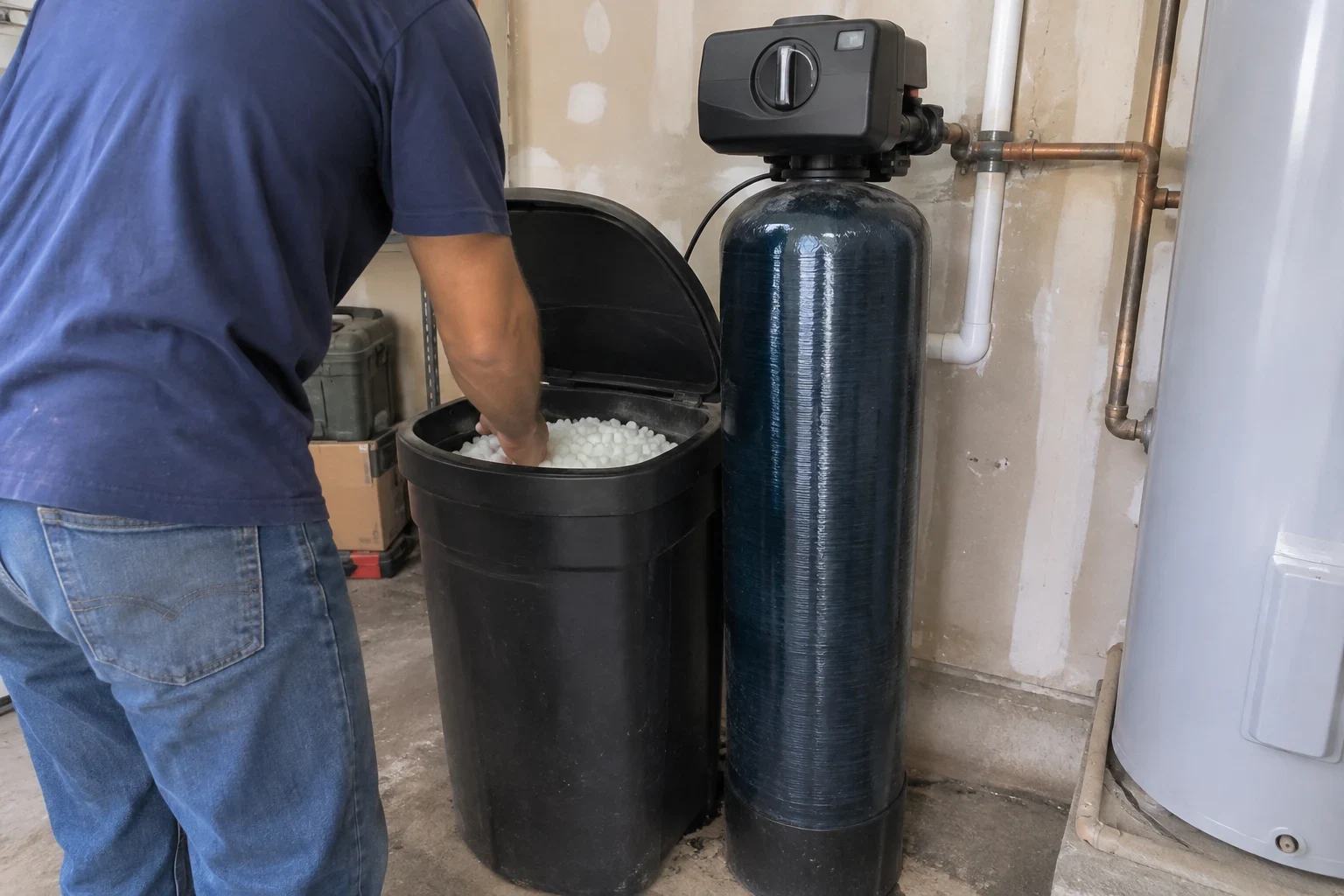
Inside a softener sits a tank of small resin beads. The beads grab the hardness minerals as water passes through and hold on to them. Every so often the unit rinses the beads with brine from the salt tank to recharge them, and that rinse goes down the drain. The water that reaches your taps no longer leaves scale behind.
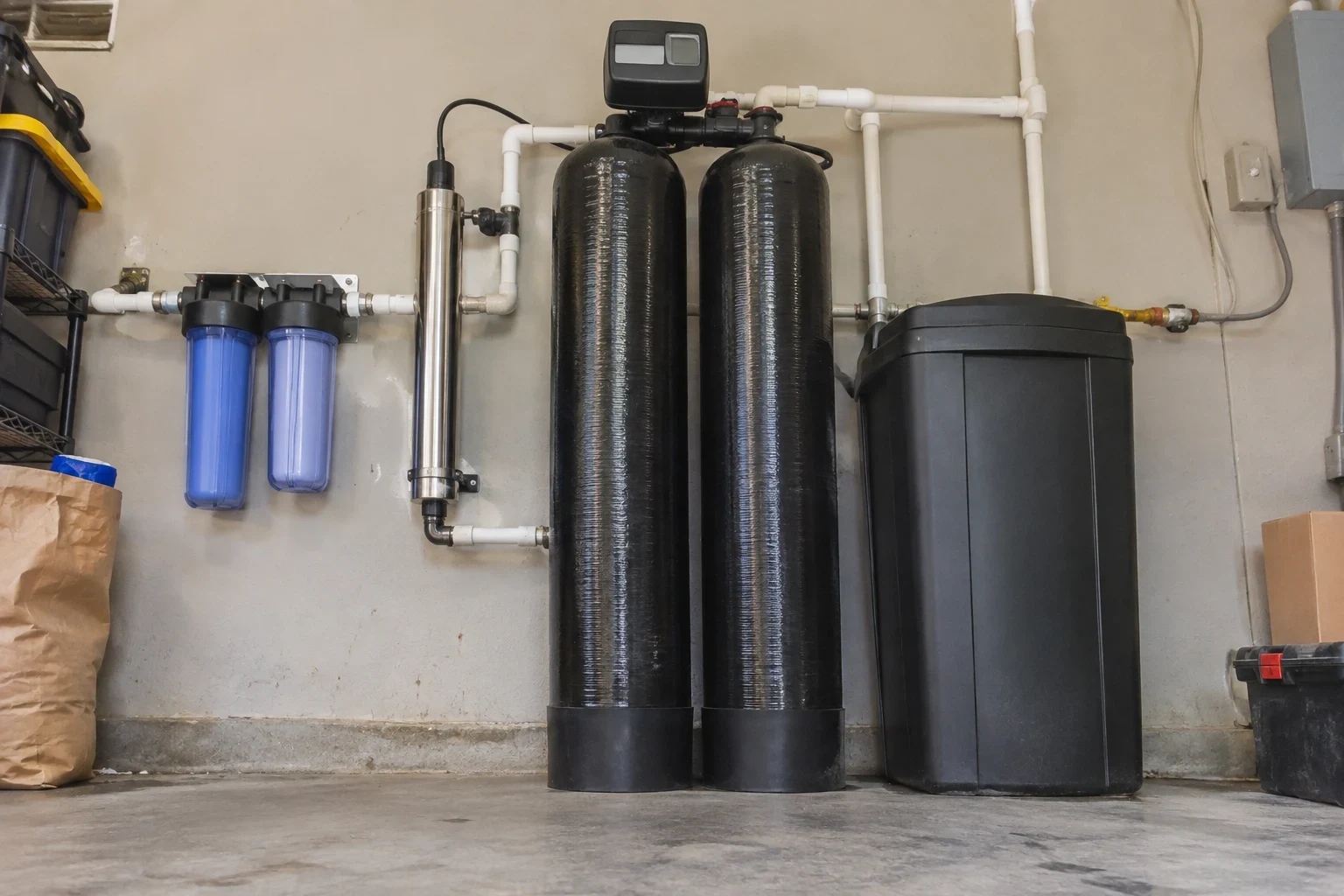
A softener is not a filter. It does little for chlorine taste, odor or sediment. If those are your main complaints, whole-home filtration or reverse osmosis may suit you better, and some homes do best with a softener plus a carbon filter ahead of it. We tell you which one your water actually needs.
What Comes With Your Softener
Hardness test at your home
We measure hardness at the tap before recommending a size. That number drives everything else.
Sizing to your household
We look at how many people live there and how many bathrooms you have. A unit that is too small recharges too often and burns through salt. One that is too big costs more than it should.
Installation
We tie into your existing softener loop if your home has one, or plumb a new connection. Installation is free. That covers a bypass valve, the drain line and setting up the brine tank.
Programming the valve
We set the recharge schedule from your hardness and water use, not a factory default.
A check-back visit
Once you have lived with it for a few weeks, we come back, retest the water and adjust settings if needed. We also go over salt levels and what to keep an eye on.
Help down the road
We offer full services after the sale. If something seems off later, you call the same people who put it in.
Signs Your Home Could Use a Softener
White crust on fixtures
Chalky buildup shows up on faucets, showerheads and glass shower doors. You scrub it off and it is back within a couple of weeks.
Spotty dishes
Glasses come out of the dishwasher cloudy or dotted with spots, even with rinse aid in the machine.
Soap that barely suds up
Minerals in the water keep soap from foaming. Shampoo and laundry detergent run out faster, and your skin still feels coated after a shower.
Water heater noise
A popping or rumbling sound from the tank usually means scale has piled up on the bottom. The heater then has to burn longer to bring the water up to temperature.
Appliances that quit early
Coffee makers, ice makers and washing machines clog up or break down well before their time.
How a Softener Job Goes
- 1
Phone call and questions
You tell us what you're seeing. We ask about your household and plumbing and give you a quote by phone once we know enough.
- 2
Test and confirm
We test hardness at your home. If the numbers don't support a softener, we say so and point you to what will help.
- 3
Install day
We shut off the water, connect the softener at the loop or main line, run the drain and fill the brine tank. We flush the system, check every joint for leaks and clean up before we leave. Most installs take part of a day.
- 4
Walkthrough
We show you the bypass valve, how to add salt and where the settings live, so nothing about the unit is a mystery.
- 5
We check back
We follow up once the system has run a while, retest your water and fine-tune the recharge schedule. Small changes here save salt and keep the water where it should be.
What Sets the Price
Installation is free, so the equipment makes up most of what you pay. Beyond that, your water and your plumbing decide the rest. We walk through each item on the phone before any work starts, so you know the number going in.
- How hard the water is and who uses it
- A higher hardness reading means the resin fills up faster. A bigger family runs more water through it every day. Both push you toward a unit with more capacity.
- Your plumbing setup
- Many newer homes already have a softener loop near the garage, and connecting to it is quick. If your home lacks one, we run a new connection off the main line, which takes more parts and time.
- Metered or timer valve
- A metered valve tracks the gallons going through and only recharges when the resin is nearly spent, so it usually goes easier on salt. A timer valve recharges on a fixed schedule. It costs less up front and has fewer settings to think about.
- Added filtration
- Some people also want the chlorine taste gone. Putting a carbon filter in front of the softener handles that, and it raises the total.
Water Softener Questions
Something not covered here? (281) 519-2358
Will softened water taste salty?
No. The unit puts a little sodium into the water, far below the point where you would taste it. If your doctor has you watching sodium, a reverse osmosis system under the kitchen sink pulls most of it out of your drinking and cooking water.
How often will I need to buy salt?
It varies with your hardness reading and the amount of water your family goes through. Most people just peek in the brine tank every month or so and pour in a bag when the level drops. When we come back after the install, we point out what a good salt level looks like in your tank.
Do I need a softener or a filter?
Each one does a different job. A softener stops scale caused by minerals. A filter takes care of chlorine, taste and odor. Water testing shows which problem you actually have, and in some homes it turns out to be both.
What maintenance does a softener need?
Keep the salt topped up and break apart any hard crust that builds on the surface. Once in a while the brine tank should be cleaned out. We show you all of this after the install, and our full services after the sale cover it if you would rather hand it off.
What if the water still feels hard once it's installed?
Give us a call. Most of the time it is a setting that needs a change, the bypass valve left open or a unit running short on capacity, and each of those is an easy fix. Catching that kind of thing is the reason we check back on every install.
Find Out If a Softener Is Right for You
Tell us what you're seeing around the house. We'll ask a few questions, explain your options and test before recommending anything.